The short answer: yes, you can absolutely use cast iron on an induction cooktop — in fact, cast iron is one of the best-performing materials you can put on induction. Because cast iron is ferromagnetic, it couples to induction’s magnetic field with near-perfect efficiency. The only things you need to get right are protecting the glass surface, managing cast iron’s uneven heating, and using the correct technique. Here is the complete 2026 guide.
Quick Answer
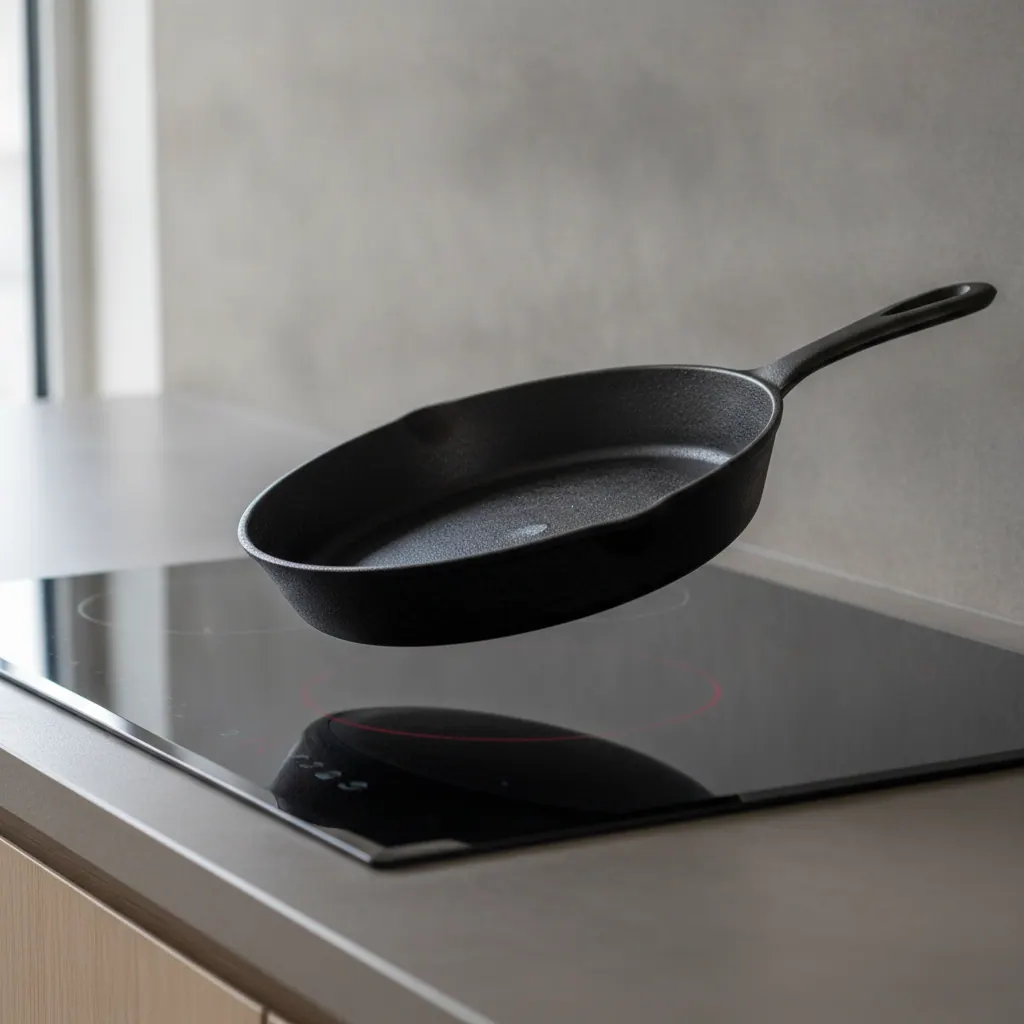
Cast iron works on induction because it is magnetic — run the fridge-magnet test and it will stick firmly. Both bare and enameled (Le Creuset, Staub) cast iron work. The three rules: lift, don’t drag (cast iron can scratch the glass), use a flat base that meets your cooktop’s minimum pan size, and preheat gradually because cast iron is slow to respond. Get those right and cast iron is one of the best searing and frying pans for induction.
Why Cast Iron Works So Well on Induction
Induction cooktops generate heat by inducing an electric current in a ferromagnetic pan base. Cast iron is almost pure iron, so it is strongly ferromagnetic — the magnetic coupling is excellent, and you lose very little energy. This is the same magnet test that governs all induction cookware: if a fridge magnet grips the base firmly, the pan works. Cast iron passes more emphatically than almost anything else, which is why it is a staple of our broader induction cookware guide.
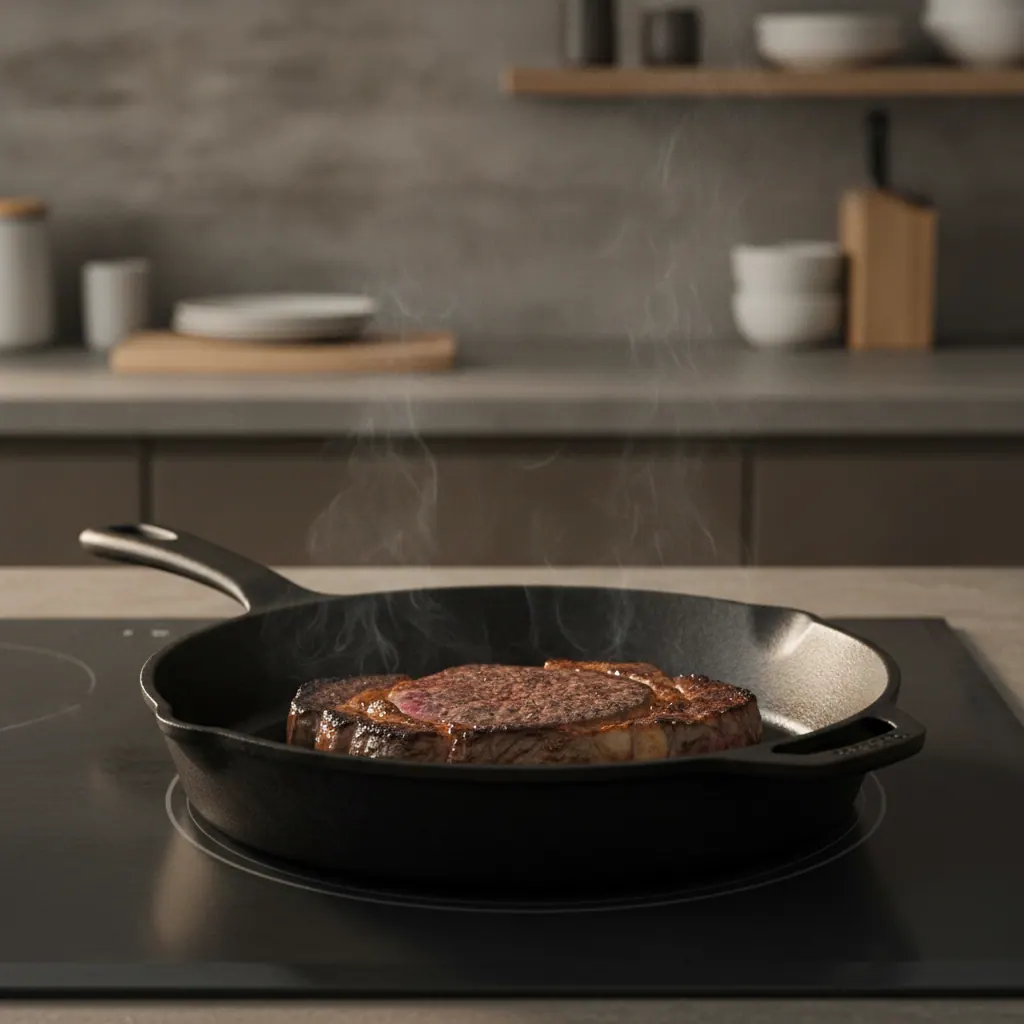
Cast iron also brings outstanding heat retention. Once it is hot, it stays hot, which makes it ideal for searing steak, shallow frying and anything that needs stable high heat without the temperature crashing when cold food hits the pan.
The One Real Risk: Scratching the Glass
The genuine downside of cast iron on induction is the glass-ceramic surface. Cast iron is heavy and often has a rough, sandy or ridged base, and dragging it across the smooth cooktop can leave scratches or grey metal smears. Protect your cooktop with three habits:
- Always lift, never slide. Pick the pan up to move or rotate it.
- Keep both surfaces clean and dry. Grit trapped between pan and glass is what actually scratches.
- Prefer a smooth, machined base. Modern cast iron from Lodge Blacklock, Field Company and Smithey has polished bases that are far gentler than old rough-cast pans.
Grey marks from cast iron usually wipe off with a dedicated ceramic-cooktop cleaner; genuine scratches do not, so prevention matters. Our guide on how to clean an induction cooktop covers safe products and technique.
Managing Uneven Heat
Induction heats only the area directly above the coil, and cast iron conducts heat sideways relatively slowly. On a pan wider than the cooking zone, you can get a hot center and cooler edges. The fixes are simple:
- Preheat on medium for 3–5 minutes so heat spreads through the iron before you add food. Cast iron rewards patience.
- Match pan diameter to zone diameter where possible — a 10-inch skillet on a 9-inch zone heats far more evenly than a 12-inch pan on a 7-inch zone.
- Use the boost zone for searing, then drop the power; cast iron will hold the heat.
This slow, steady behavior is the opposite of carbon steel, which is why we recommend carbon steel for fast stir-frying — see our best woks for induction and wok on induction guides for that use case.
Bare vs Enameled Cast Iron on Induction
Both work, with small differences:
- Bare cast iron (Lodge, Field, Smithey): seasons to a nonstick surface, takes the highest heat, best for searing. Watch the rougher base on the glass.
- Enameled cast iron (Le Creuset, Staub): the iron core is still magnetic, so it works on induction, and the smooth enameled base is actually gentler on the glass. Ideal for braising, sauces and acidic foods. Avoid empty high-heat preheating, which can damage enamel.
For specific model recommendations across both types — and which perform best on induction’s flat zones — see our tested best cast iron pans for induction and gas round-up.
Pan Detection: Will Your Cast Iron Trigger the Cooktop?
Induction cooktops need a minimum base diameter (usually around 4.7 inches) to detect a pan. Most skillets clear this easily, but very small cast iron — egg pans, mini servers, some grill pans — may fall below the threshold and show “no pan detected.” Match the pan to the zone, and if you cook with small pans regularly, look for a cooktop with a low detection threshold or an all-size/flex zone. If your cooktop refuses to recognize a pan that should work, our induction cooktop not heating troubleshooter covers the common causes.
A Note on Buzzing
Cast iron is usually quieter on induction than thin carbon steel because its mass damps vibration. If you do hear a faint hum or buzz at high power, it is normal — it comes from the coil’s oscillation interacting with the pan. Heavier pans reduce it. Our induction cooktop buzzing and humming guide explains when noise is normal and when it is not.
Bottom Line
Yes — cast iron is not just compatible with induction, it is one of the best materials for it. The magnetic coupling is excellent, heat retention is superb, and both bare and enameled cast iron work. Just lift instead of dragging to protect the glass, preheat gradually to even out the heat, and match pan size to zone size. Do that and your cast iron skillet or Dutch oven will sear, fry and braise beautifully on any induction cooktop. To pick the right pan, jump to our best cast iron pans for induction guide, or see the full induction cookware guide for everything else that lives well on induction.
Frequently Asked Questions
Can you use cast iron on an induction cooktop?
Yes. Cast iron works excellently on induction because it is ferromagnetic — induction’s magnetic field couples to it perfectly, so a fridge magnet sticks firmly to the base. Both bare and enameled cast iron work. The only real precautions are to lift rather than drag the pan (cast iron can scratch the glass), use a flat-bottomed pan that meets the cooktop’s minimum size, and heat gradually because cast iron is slow to respond.
Will cast iron scratch an induction cooktop?
It can if you drag it. Cast iron is heavy and often has a rough or ridged base, so sliding it across the glass-ceramic surface can leave scratches or grey metal marks. Always lift the pan to move it, keep both the pan base and the cooktop clean and dry, and consider a pan with a smooth, machined base. Light grey marks usually wipe off with a ceramic cooktop cleaner; deep scratches do not.
Does enameled cast iron work on induction?
Yes. Enameled cast iron such as Le Creuset and Staub works on induction because the iron core underneath the enamel is still ferromagnetic. Enameled pans are actually gentler on the glass than bare cast iron because the enamel base is smoother, though you should still lift rather than drag them. Check that the base is flat and meets your cooktop’s minimum pan-detection size.
Why does my cast iron heat unevenly on induction?
Induction only heats the area directly over the coil, and cast iron conducts heat sideways slowly, so you can get a hot center ring with cooler edges — especially on a pan wider than the cooking zone. The fix is to preheat on medium for 3-5 minutes so the heat spreads through the iron before you cook, and to match pan size to zone size. Cast iron’s strength is heat retention, not fast even spreading.
Is cast iron good for induction cooking?
Cast iron is one of the best cookware materials for induction. It couples efficiently to the magnetic field, holds heat superbly for searing and frying, and works on any induction surface. Its only weaknesses are weight, slow responsiveness to power changes, and the need to lift it to protect the glass. For searing steak or shallow frying, it is hard to beat.