GE Profile cooktops occupy one of the most useful positions in the entire market: a step above mainstream value, a step below luxury, and consistently strong on price-to-performance. Whether you are looking at a value-leading GE Profile induction cooktop, a flexible gas model or a simple electric radiant unit, this guide breaks down the real 2026 lineup, model by model, with sizes, specs, prices and an honest take on who GE Profile cooktops are for.
Quick Answer
GE Profile cooktops deliver some of the best value in 30-inch and 36-inch induction and gas, backed by SmartHQ Wi-Fi connectivity and made by GE Appliances (Haier-owned, headquartered in Louisville, Kentucky). The 36-inch PHP9036DTBB induction is the standout, offering near-premium performance for thousands less than Bosch Benchmark or Thermador. Expect roughly $900 to $3,000 depending on fuel and size.
GE Profile Cooktop Range at a Glance
GE Profile spans all three fuel types, with induction as the clear highlight of the line.
| GE Profile Model | Fuel Type | Sizes | Standout Feature | Approx. Price |
|---|---|---|---|---|
| PHP9036DTBB | Induction | 36” | Synchronized elements + power boost | $2,600 – $3,000 |
| PHP7036DTBB | Induction | 30” | 4 elements, glide touch control | $1,900 – $2,200 |
| PGP7036SLSS | Gas | 36” | 5 sealed burners, edge-to-edge grates | $1,200 – $1,500 |
| PGP9030 / PGP7030 | Gas | 30” | Power boil burner | $1,000 – $1,300 |
| PP9036 / PEP7030 | Electric radiant | 30”, 36” | Glass-ceramic radiant surface | $900 – $1,300 |
Prices are approximate US retail figures for 2026 and vary by finish, retailer and promotion.
GE Profile Induction Cooktops
The induction range is where GE Profile genuinely punches above its price class. We benchmark the 36-inch PHP9036DTBB directly in our best induction cooktops of 2026 round-up, where it earns our “best value” pick.
PHP9036DTBB (36-inch)
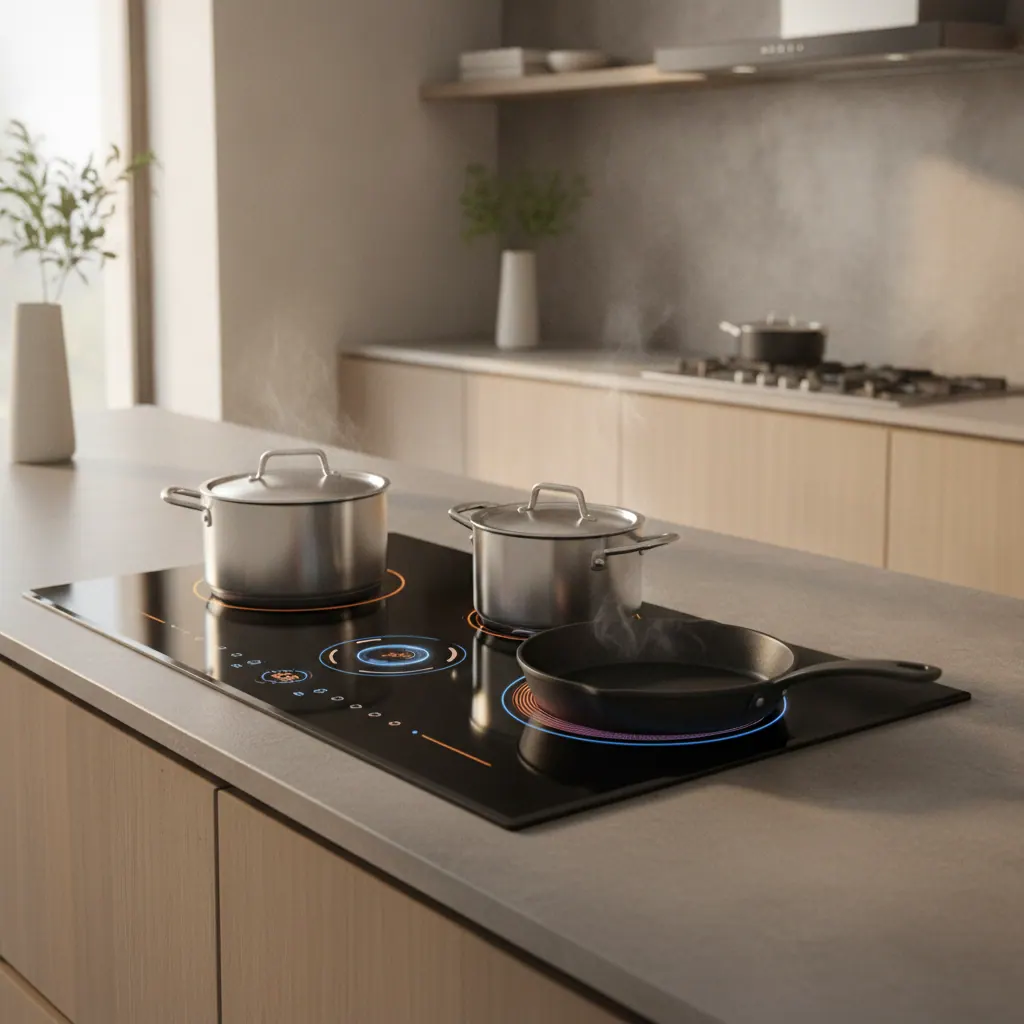
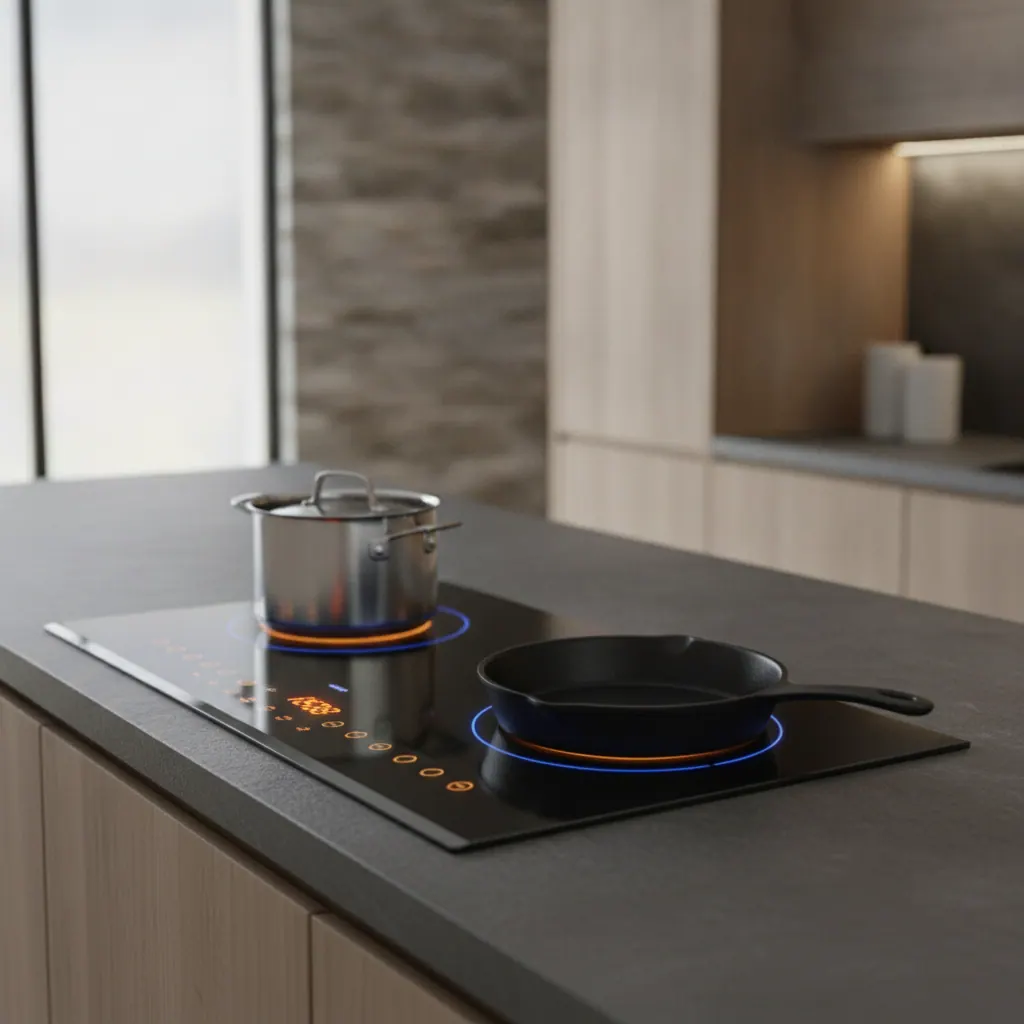
The PHP9036DTBB is GE Profile’s flagship induction cooktop. It carries five elements across a 36-inch glass surface, including a high-power element that boosts for rapid boiling, plus synchronized elements that link two zones into one continuous oval surface for griddles and large oval pans. A full glide touch control panel runs the show, and SmartHQ Wi-Fi lets you monitor and control it from the app. In our testing this model lands within striking distance of premium units on boil time while costing substantially less. If you are shopping this width specifically, our best 36-inch induction cooktops guide places it next to Bosch, Miele and Thermador.
PHP7036DTBB (30-inch)
The 30-inch PHP7036DTBB brings the same control scheme and a four-element layout to smaller cutouts, at a meaningfully lower price (around $1,900–$2,200). For a typical family kitchen with a 30-inch opening, it is one of the smartest value buys in induction today.
Both induction models require a dedicated 240V circuit — see our cooktop installation guide for circuit sizing before you buy.
GE Profile Gas Cooktops
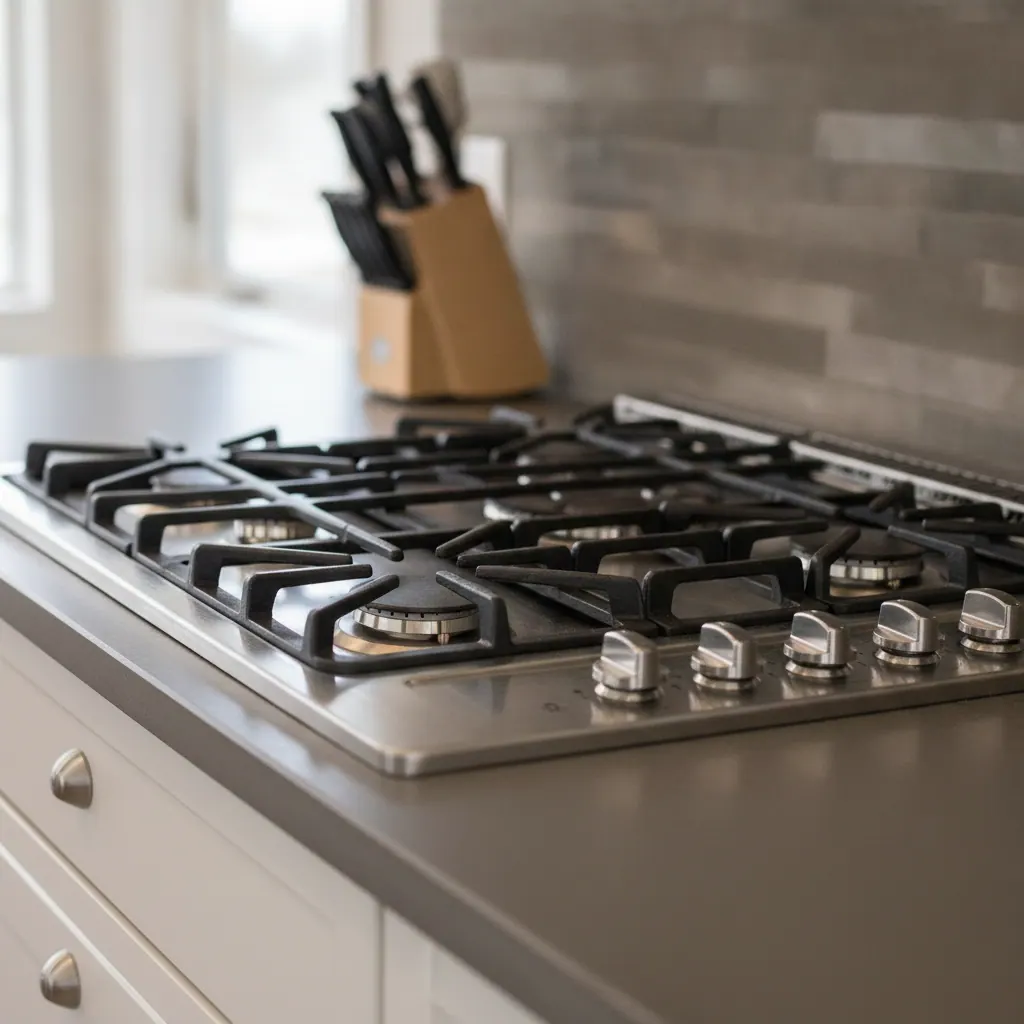
GE Profile gas cooktops focus on flexible everyday cooking rather than pro-style BTU bragging rights. The 36-inch PGP7036SLSS offers five sealed burners with edge-to-edge continuous grates that let you slide heavy pots between zones, anchored by a high-output power-boil burner and a low simmer burner. The 30-inch models keep the same core layout in a smaller footprint. These are not 18,000+ BTU pro burners — for that you would step up to Monogram, Wolf or Viking — but for most home cooking they are more than adequate. To understand BTU expectations across the category, see our best 36-inch gas cooktops roundup.
GE Profile Electric & Radiant Cooktops
For buyers who want simplicity without induction’s cookware requirements, GE Profile offers glass-ceramic electric radiant cooktops in 30-inch and 36-inch widths. They use rapid-heat radiant elements with bridge zones and keep-warm settings under a wear-resistant ceramic surface, at the most affordable entry point into the brand ($900–$1,300). Radiant electric trails both gas and induction on responsiveness, but it remains the lowest-cost way into a sleek glass-top cooktop.
Smart Features: SmartHQ Connectivity
A defining trait of GE Profile is SmartHQ Wi-Fi connectivity across most models. The app supports remote monitoring, recipe guidance, software updates and integration with voice assistants. Some induction models also support GE’s Chef Connect-style features that sync the cooktop with a compatible over-the-range microwave or hood. Smart features are genuinely useful for monitoring rather than gimmicky, though they are not a reason on their own to choose the brand.
Build Quality, Warranty & Where GE Profile Cooktops Are Made
GE Profile is a brand of GE Appliances, owned by Haier since 2016 and headquartered in Louisville, Kentucky. Many GE cooking products are assembled in the United States, including at the company’s Appliance Park complex, though component sourcing is global — always confirm origin on the model spec sheet. Build quality is solid mid-tier: clean glass surfaces, well-damped controls and reliable electronics, if not the heavy-gauge feel of luxury brands.
On warranty, GE Profile cooktops carry the standard one-year limited warranty on parts and labor in normal residential use. That is shorter than Miele’s coverage and comparable to most mainstream competitors; confirm exact terms with your retailer, as extended coverage is often available.
GE Profile vs Samsung vs Bosch
The most common cross-shop for GE Profile induction is Samsung and Bosch. Against Samsung, the two trade blows on smart-home features and price — we break the head-to-head down in our GE Profile vs Samsung induction comparison. Against Bosch, GE Profile typically wins on price while Bosch edges ahead on fan quietness and refinement; see our Bosch cooktops guide for that side. If you want a structured way to weigh brand, fuel and size for your own kitchen, our how to choose a cooktop guide walks through it step by step.
Pros and Cons of GE Profile Cooktops
Pros
- Excellent price-to-performance, especially in induction
- SmartHQ Wi-Fi connectivity across most models
- Synchronized elements on induction for large oval cookware
- Broad lineup spanning induction, gas and electric in 30” and 36”
- Backed by GE Appliances’ large US service and parts network
Cons
- One-year standard warranty trails premium brands
- Gas models lack pro-style high-BTU burners
- Build feel is mid-tier, not luxury
- Radiant electric models feel dated next to induction
Who Should Buy a GE Profile Cooktop?
Choose a GE Profile cooktop if you want strong cooking performance and useful smart features without paying luxury prices, and you value a wide US service network. The PHP9036DTBB induction is the headline pick for value-focused buyers who still want near-premium boil times; the 30-inch PHP7036DTBB suits standard family kitchens; the gas and electric models cover buyers who prefer those fuels on a budget. If your priority is the quietest possible fan or the longest warranty, cross-shop Bosch and Miele before deciding.
Frequently Asked Questions
Are GE Profile cooktops good?
GE Profile cooktops are among the best value in the mid-tier, especially the induction models. The 36-inch PHP9036DTBB consistently ranks as a top value induction cooktop, delivering roughly 85% of the performance of premium brands like Bosch Benchmark at a noticeably lower price. They pair strong cooking performance with SmartHQ Wi-Fi connectivity, which makes them a smart pick for buyers who want features without the luxury markup.
Where are GE Profile cooktops made?
GE Profile is a brand of GE Appliances, which has been owned by Haier since 2016 and is headquartered in Louisville, Kentucky. Many GE Appliances cooking products are assembled in the United States, including at GE’s Appliance Park in Louisville, though component sourcing is global. Always confirm the country of origin on the specific model’s spec sheet.
What is the difference between GE, GE Profile, Cafe and Monogram?
They are tiers of the same parent, GE Appliances. GE is the mainstream value line, GE Profile sits a step up with more features and smart connectivity, Cafe focuses on customizable design (hardware finishes and knobs), and Monogram is the luxury, pro-style tier competing with Wolf and Thermador. For most kitchens, GE Profile hits the sweet spot of features and price.
Does GE Profile make induction cooktops?
Yes. GE Profile offers built-in induction cooktops in both 30-inch (PHP7036DTBB) and 36-inch (PHP9036DTBB) widths, with synchronized elements that link two zones into one large cooking area, a glide touch control panel and a high-power element that boosts for fast boiling. They require a dedicated 240V circuit.
How much do GE Profile cooktops cost?
GE Profile cooktops range from roughly $900 to $1,500 for electric radiant and gas models, up to about $2,100 for a 30-inch induction and $2,600 to $3,000 for the 36-inch PHP9036DTBB induction. Prices vary by retailer and promotion, and induction models are frequently discounted.